Why Build a Personal Reference Library (and How to On a Budget)
This website may earn commissions from purchases made through links in this post. As an Amazon Associate, I earn from qualifying purchases.

Why build a personal reference library when everything is online? Because it’s frugal insurance. Learn what to include and how to build one on a budget.
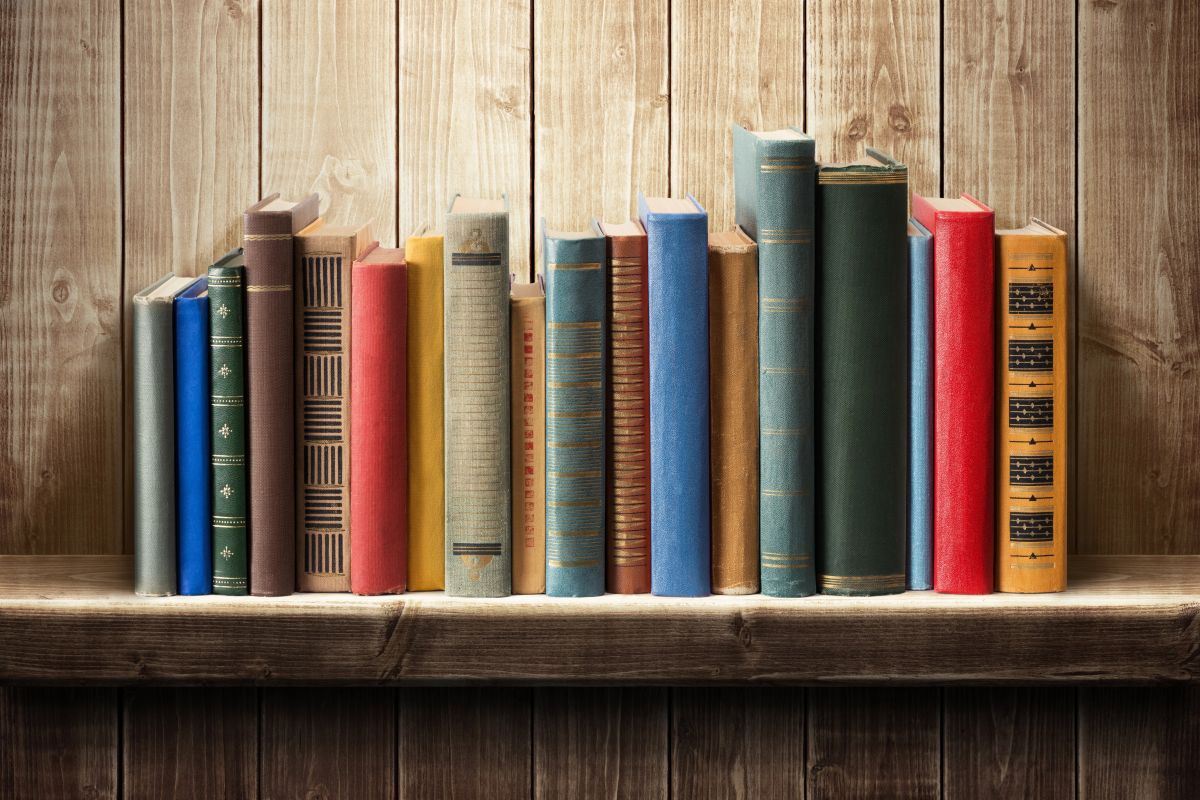
It wasn’t so long ago that having a personal reference library was a standard practice; from a set of Encyclopaedia Britannica if you were wealthy enough (we weren’t, but we did have my mum’s old set of 6 encyclopaedias from the 1950s and a Pears cyclopaedia from the 70s my dad picked up second-hand), to a dictionary and a well-thumbed common sense cookbook.
Even though we have a world of information in our pocket, and now AI to ask all the questions we could ever think of, I think it’s still a good idea to create a physical reference library that is specifically tailored to your circumstances.
For the purpose of this article, I’m going to refer to two parts of a personal reference library:
- the ‘Handbibliothek‘
- the Contingency Collection
If you’re a reader, your library will include many other books: books you enjoy, childhood favourites, books you haven’t read yet.
But today I’m going to focus on these two sections of a home library. Here’s what they are:
‘Handbibliothek’ – this is a German term (literally ‘hand library’) that means books kept immediately ‘to hand’ for frequent use. These are resources you use all the time. For me, it would be our common sense cookbook – something I, and now my kids, refer to every week. For the religiously inclined, there might be a religious text on your Handbibliothek.
Contingency Collection – this is a ‘just in case’ part of a reference library. A lot of ‘just in case’ information is available on the internet, but having hard copies – whether it’s purchased books or downloaded and printed information – gives us a backup.
5 Reasons to Build a Personal Reference Library
With the internet within easy reach, why bother, then, with building a personal reference library?
As a book lover, this feels like a heretical question; nevertheless, here are 5 good reasons to have a small personal library.
1. Save Money
The reference books suggested below can help you save money by helping you cook from scratch, mend instead of replace, fix stuff yourself, even grow and preserve food if you’re inclined. Not only that, there’s no subscription to your bookshelf.
2. Self Reliance
While I’m not a doomsday prepper, I do have a quiet (and sometimes not so quiet) anxiety voice in my head chanting ‘be prepared, be prepared,’ probably because I was a (Girl) Guide and now my kids are deep into the Scouting world too. And for me, a big part of being prepared is having access to information.
Building a self-reliance library helps you to be less dependent on the system (yes, I’m talking doomsday prepping after all).
3. Ownership of Information
Streaming, eBooks, websites, etc. are fantastic sources of information, but you don’t own them; they can be taken away, paywalled, or changed at any time. By having your own reference library, you control access at all times.
4. Information that Doesn’t Rely on Everyday Electricity and Internet Access
What happens if you need first aid advice and you don’t have access to the internet or phone, like during a cyclone?
Having a backup to the internet in the form of reference material means you’re covered in an emergency.
5. Digital Detox
Going deliberately analogue is a good way to simplify life. The biggest problem with digital reference material is you can easily get sucked into a rabbit hole of unrelated information. Or at least, I have that trouble. Physical media allows you to focus on the task at hand.
How to Build a Personal Reference Library on a Budget
We’re not trying to recreate the Alexandrian Library here, so your reference library might only be a couple of carefully curated books along with other reference materials.
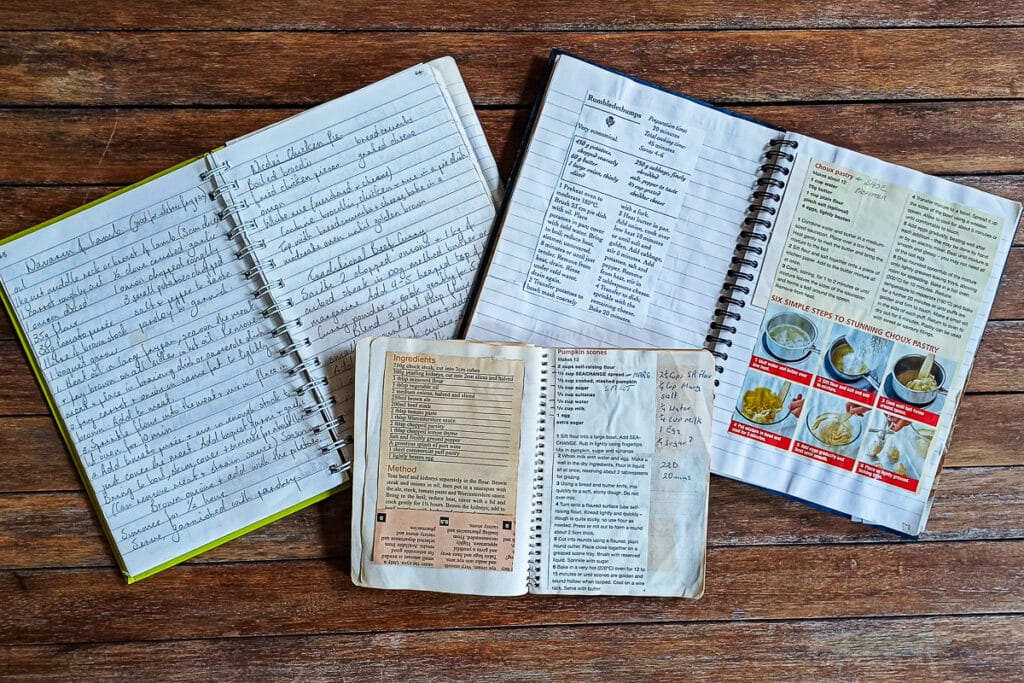
Your library doesn’t have to include books at all. Reference materials might include:
- Printed PDFs
- Self-made guides from information on the internet
- magazine clippings
- user manuals
- personal reference notes and journals (like a gardening journal)
- A home management binder with your critical information.
By keeping your reference library minimal, you keep costs and clutter low.
When you do buy books, you can save money by:
- buying books second-hand (some reference books, like for first aid and food preserving, are worth getting new and up-to-date)
- raiding your parents’ books (if they are ok getting rid of them – I still raid my mum’s old books and I’m nearly 50, she’s more often than not happy to get rid of the clutter)
- buying modern references on sale
Book Ideas for a Personal Reference Library
The key word here is personal. I’ve added some links to book ideas, but the best books are ones that are personal for your circumstances. For example, I have books on gardening in the tropics; if I lived in a colder climate, I’d have completely different gardening books.
Your Handbibliothek: Books to Have at Hand
These are the ones that are easily accessible for quick reference.
Personal Journal
Best record of things that work and don’t work for you. A gardening journal is one example; a family record for medical information is another.
First Aid Book
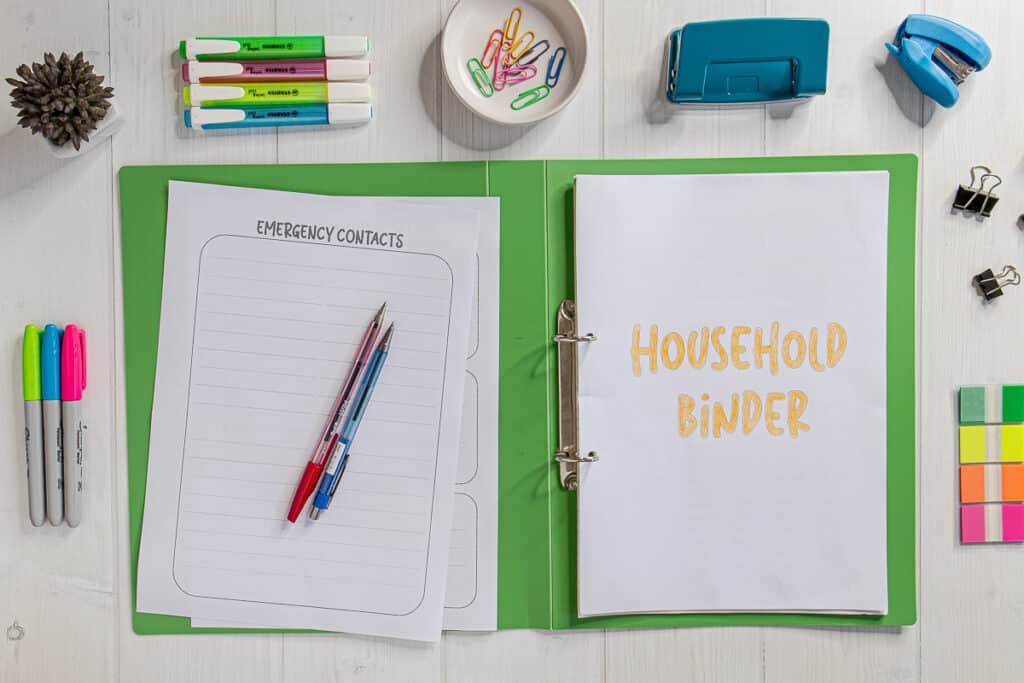
A first aid book doesn’t replace doing an actual first aid course and keeping a certificate up-to-date, but it can be useful to have handy as a reference in an emergency. We used to have a magnetic one that we kept stuck to the fridge, and we referred to it all the time.
However, it did become out-of-date; some things, like CPR best practice, change, so it’s a good idea to get a current first aid book through someone reputable like the St John Ambulance.
Common Sense Cookbook
A common sense cookbook that includes things like cooking conversions, meat cuts and cooking times, different vegetables and how to prepare them, as well as basic recipes, is invaluable. I’ve had mine since the late nineties and still refer to it, and now my daughter is learning to cook from it too. I was going to link to it, but it’s out of print, and second-hand ones are $150, lol, so no link. Also, depending on where you are in the world, you might not want an Aussie one.
Yes, a lot of this stuff you can now look up online, or even ask AI, but I find having a reference you can quickly grab is easier.
Everyday Food Storage and Food Safety Guide
These can be downloaded from the internet (here’s the Australian one (scroll down for the infobites factsheets) + the QLD gov food storage guide (ignore the newly arrived refugees – the info is relevant for everyone)). They can be handy to have as a reference for everyday food safety or when hosting a party etc.
A Dictionary
Not really related to frugal living, but I reckon every home should have one. I should probs use mine more often.
Basic Homemaking and Home Repair Skills
A reference with cleaning tips and recipes, general care (e.g. how to take care of wooden furniture), and how to run a household, etc.
You might also want a home repairs book, but keep in mind, American ones include wiring, and DIY electrical work is illegal in Australia.
I quite like Nancy Birtwhistle’s Clean and Green – you can check out her Instagram feed for lots of free tips to get a feel for her shtick.
Hobby Bible
For me, it’s a basic embroidery stitch bible, a crochet bible, and a quilt block bible. You might have a woodwork reference book. These can be handy when you need to check a technique.
Basic Sewing and Mending
Need to darn a sock, sew on a button, take up a hem? A sewing reference book can be a handy reference that saves you money and helps your clothes last longer.
Texts of Solace
Personally, I’m not religious, but if you are, then a religious text is probably the first item on your list. Alternatively, it might be a philosophical text – I have Marcus Aurelius’ Meditations on hand.
Contingency Collection
These books cover regular just-in-case reference materials and SHTF (shit hits the fan) stuff if you’re into prepping.
Emergency Guides
Depending on where you live, you might have to plan for emergencies and having a guide that doesn’t require internet access can be handy in emergencies.
For example, the Queensland cyclone prep guide or bushfire guides, depending on your local area.
These can be downloaded from the net and can be handy to refer to if the power is out.
Gardening Guides
This might be on your at-hand shelf if you’re an avid gardener.
If not, a gardening guide for your local climate can be a good reference.
User Manuals
These probably don’t have the same relevance they once did, when things could be repaired. My dad had manuals for the car and the lawn mower and would fix them. If you have things that can be fixed, the manual is invaluable.
Bushcraft
There are a bazillion bushcraft books out there – if you’re interested, best to get one that focuses on your local area (bears v crocs, lol, although I couldn’t find an Australian-specific one, so it might need cobbling together).
We have the newer Boy Scout Handbook because we’re involved in the Scouts, which is not exactly Australian. I’m always impressed by how capable the kids are thanks to the Scouting movement.
‘Lost Skills’ and Homesteading Bible or Related Books
Under this heading, I’d also include books on preserving, home remedies, and local foraging guides.
For preserving specifically, it’s important to get a modern, up-to-date book or information, not old second-hand books, to ensure it’s recommending safe food preserving techniques. The old ones are potentially dangerous.
You don’t need to create a grand or expensive library; just a few well-chosen books and binders that suit your life and circumstances. If I were to choose only 2, it would be a first aid book and a common-sense cookbook.
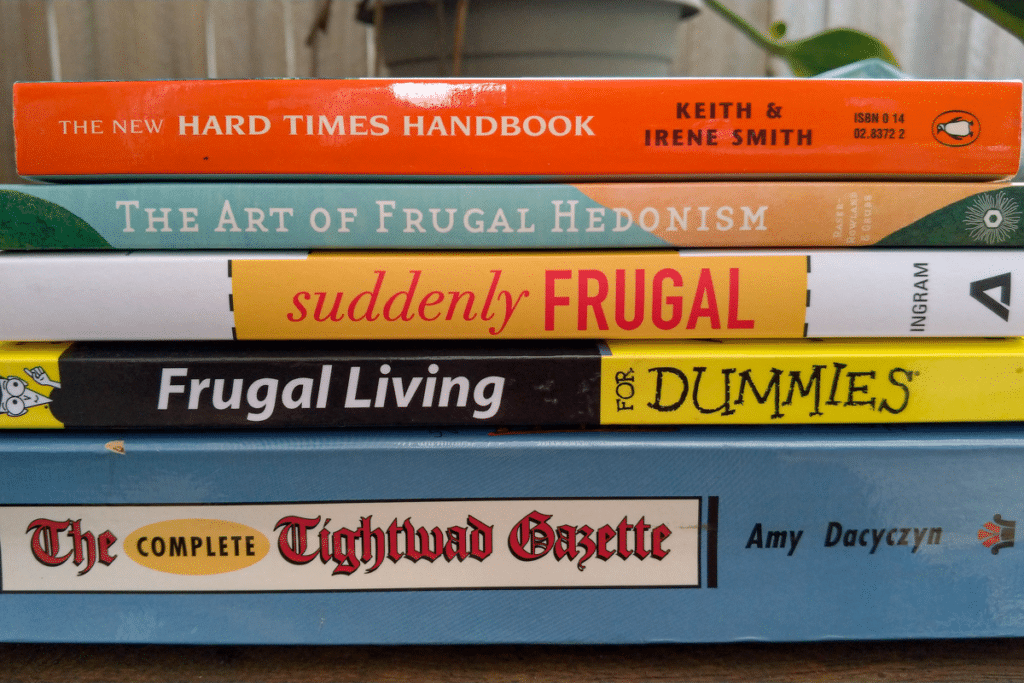
What would you put in your reference library?