The Pantry Challenge That Saves Me Hundreds
This website may earn commissions from purchases made through links in this post. As an Amazon Associate, I earn from qualifying purchases.
Save up to $2500 a year by doing a pantry challenge. Here’s how I do a full cleanout to reduce waste and actually use what’s in the cupboard.
Ever found two opened, half-used packets of cinnamon hiding in the pantry?
Or maybe, like me, you’ve somehow ended up with three bottles of hoisin sauce. At some point, I must have convinced myself there was going to be a nationwide teriyaki shortage… or I just forgot I’d already bought it.
Three times.
I’ve been meaning to do a pantry challenge for a while now. Things have been hectic, and every week, as I’m shoving more groceries into the pantry, I realise it is getting out of hand.
Time for a clear out.
That’s where a pantry challenge comes in.
Australian households throw out around 2.5 million tonnes of food every year, costing each household up to $2,500! [source] A regular pantry challenge helps you keep on top of those half-eaten packets and three bottles of hoisin sauce 👀 so they don’t go to waste.
In this post, I’m sharing how I run my own pantry clean-out challenge and what’s worked for me.
If you’re after some pantry-friendly meal ideas, I’ve listed a bunch toward the end to get you started.
What’s the Point of a Pantry Clean-Out Challenge?
The purpose of a pantry clean-out challenge is to regularly go through and audit what you’ve got in your pantry, so nothing ends up going off before it gets eaten.
In other words, it’s a way to reduce waste.
It’s also handy for saving a bit of money. Whether it’s one of those weeks where the budget’s extra tight, or you just want to squirrel away a few extra dollars.
That said, a pantry clean-out challenge isn’t the same as a pantry clear-out.
You’re not trying to empty the shelves completely (unless you’re moving house, maybe).
A well-stocked pantry is a good thing. It saves you money and time. And it’s not a no-spend challenge either. You’ll still be buying groceries, especially fresh produce.
The idea is to give your pantry a bit of attention: eat through anything that’s nearing its use-by date, and literally clean it out – wipe the shelves, scrub the corners, maybe even reorganise a bit while you’re at it.
How Often Should You Do One?
If your goal is simply to give the pantry a good clean-out, then once a year is a solid rhythm.
It makes a great addition to your spring cleaning routine. A tidy pantry, fewer forgotten tins, and keeping on top of the pantry moths?
Win-win.
I reckon twice a year would be best, but as it’s hard to find time to do all the things we’re supposed to, once is a good target.
How to Do a Pantry Clean-Out Challenge
The first step is to pick a time when you’ve actually got some time. Maybe a weekend or a few solid hours to pull everything out of your pantry and do a bit of planning.
Step 1 – Purge
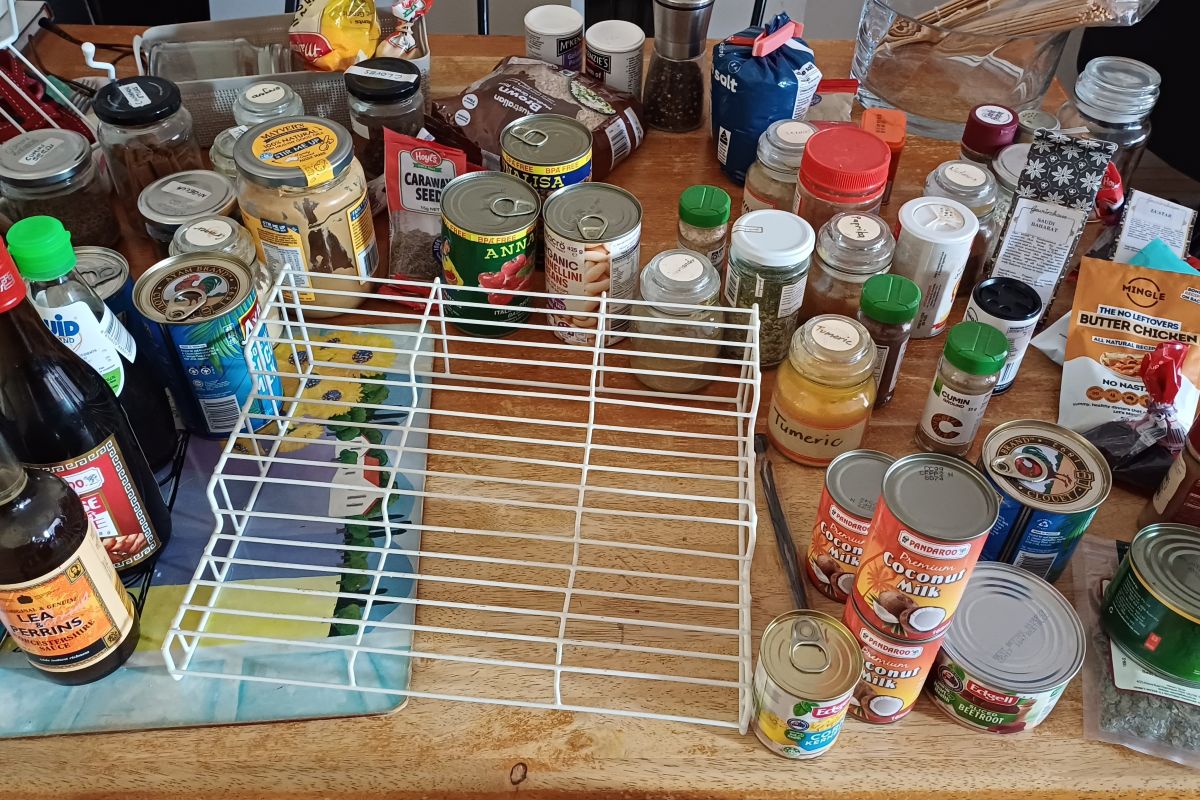
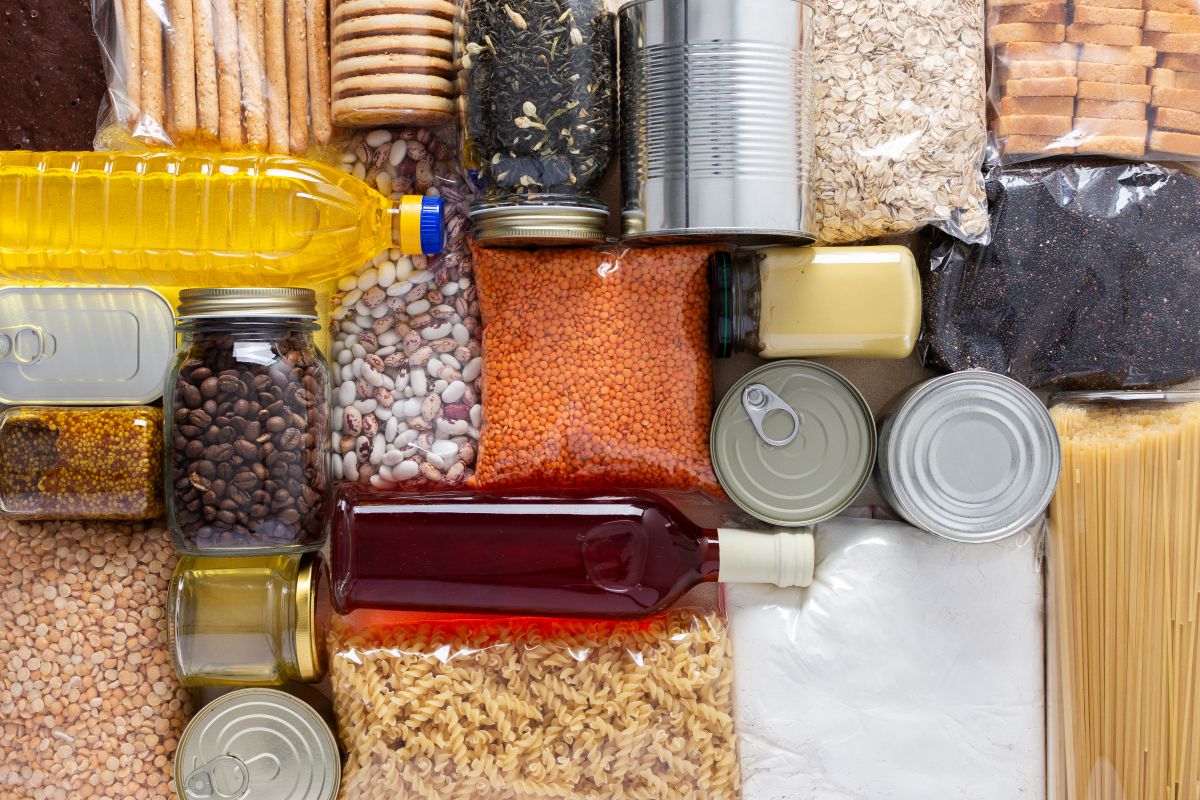
Start by taking everything out, shelf by shelf, and doing a stocktake of what you’ve got on hand. It helps if you’ve got a big bench or dining table to lay everything out.
Not a lot of time? Just do one shelf at a time instead of the whole pantry.
Group like with like: all the flour together, all the rice and grains, tins, sauces, that sort of thing. Seeing it all together helps you get organised and makes meal planning much easier.
The first time I did it, I found about five varieties of rice, and we really only eat one kind regularly. That led me to simplify my pantry.
A way I balance diversity without waste is to buy small amounts from bulk bins when I want to try something different. But I always freeze those grains for 24 hours first as pantry moths have come in from bulk bins in the past.
Next, check all the dates and toss anything that’s past its use-by date.
For items past their best-before date, use your judgment. Don’t get food poisoning. This is especially true with swollen cans that can have botulism.
Some things are still fine depending on how far past they are and how they’ve been stored. And if you find anything infested with pantry moths (we’ve all been there), straight into the bin it goes.
Just a note: I’m sharing what works for me, but always check FSANZ guidelines or local recommendations when it comes to food safety.
Optional – Creating a Pantry List
If you’re a list person, writing down what you have on hand can help with meal planning later.
If you want to create a list, save time by using AI. You can use the voice-to-text feature on your phone and just read things out while pulling items from the pantry. Yes, you can do this with a note-taking app as well, but AI can organise your list for you, saving time.
You can then either copy and paste the list to use when you’re meal planning or interact with the list, asking AI to suggest meal ideas from what you have on hand.
Personally, I love lists, but between me being lazy/busy and the rest of the family taking stuff from the pantry and not crossing it off the list, I find it a bit of admin I don’t have time to do.
I haven’t tried it, but you might be able to use the same AI chat to strike things off the list and add new things using voice-to-text – like “frozen spinach, use by October, add to the list”. If you try it, let me know how it goes!
Step 2 – Clean and Organise
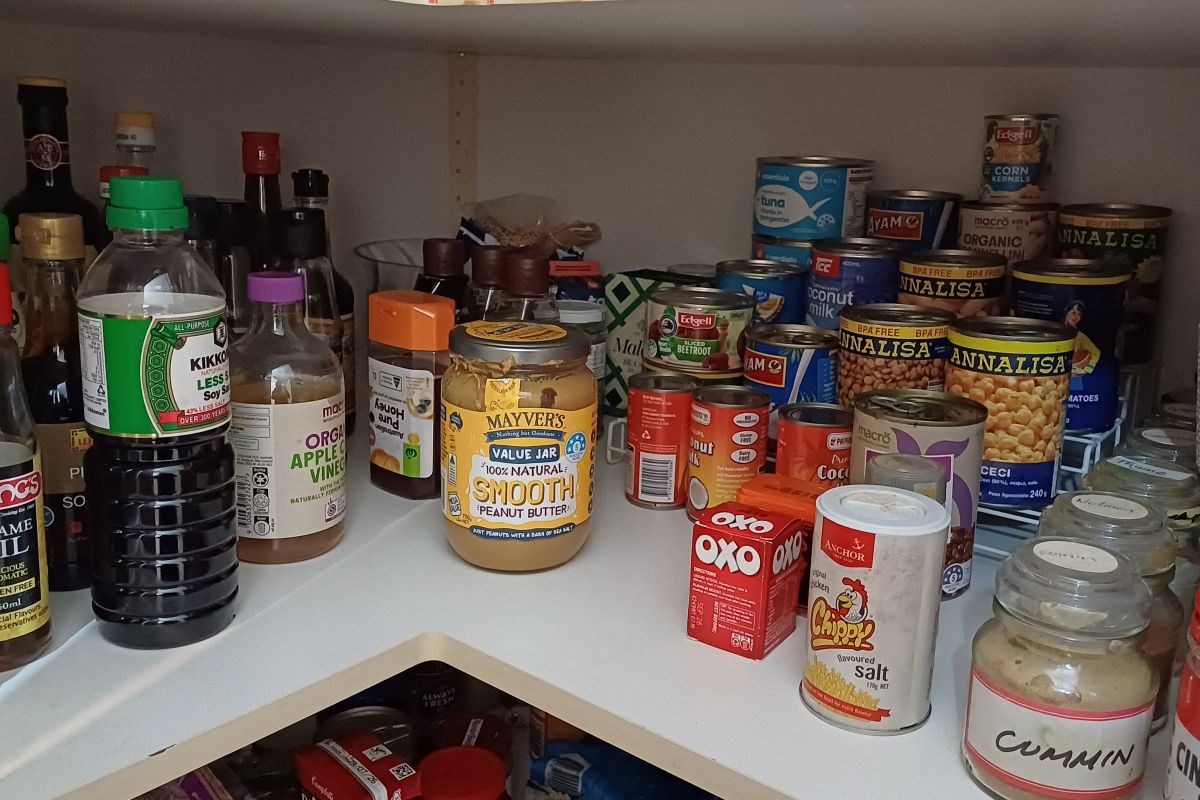
Once everything’s out, give your pantry a proper clean.
Hot soapy water does the trick. I also like to tuck bay leaves between the shelf and the wall, it’s an old trick to deter pantry moths. I’ve found pantry moth baits are also worth the money.
And when you’re putting everything back into the pantry, group like with like — flour with flour, tins with tins, snacks with snacks. It makes it so much easier to see what you have next time around (and to avoid accidentally buying hoisin sauce again).
If there’s anything close to the use-by date that needs consuming ASAP, don’t put it back in the pantry; leave it out so it’s not ‘out of sight, out of mind’.
Creating a Meal Plan That Works
The next step, once the pantry is clear (even if it’s just one shelf) is to plan meals that use up what needs consuming.
A good way to think of it is like a mystery box challenge on MasterChef. What can you create with these random ingredients? If you have a few basic, flexible recipes under your belt, like frittatas, soups, or stir-fries, it makes it easier to whip something up. It seems we’ll be having a lot of teriyaki in the next few weeks 🤣.
(I’ve written more about those kinds of recipes here if you need ideas.)
You might want to pair your pantry challenge with a freezer clean-out too. Again, you’re not trying to get rid of everything, just the bits that have been in there a while and need using up. Not your weekly staples like frozen peas, but the mystery leftovers or half-bags of things you’ve forgotten about. Then you can match your pantry and freezer meals with some fresh produce from the shops.
Don’t just think dinners.
Baking and breakfasts are a great way to use up odds and ends like tins of fruit or random flours – think cakes, muffins, pancakes, or slices.
Another good option is toasted muesli. If you’ve got bits of dried fruit, stray handfuls of nuts, and some rolled oats, you can easily mix up a batch. It keeps well and makes for a quick, nourishing breakfast.
If you’ve got a lot to use up and you’re not sure you’ll get through it all in time, think about meals you can cook ahead and freeze for later.
For example, if you’ve got tinned apples that need using, you could bake a batch of apple muffins and freeze them individually for easy lunchbox snacks. That way, you’re moving food from the pantry to the freezer, and giving it a longer life.
The trick, of course, is making sure those frozen bits don’t disappear into the abyss and actually get eaten in a reasonable timeframe!
As you’re going through your pantry, it’s also worth considering whether you’ll replace the items you’re using up.
If it’s something you use regularly but it’s nearing its use-by date, it might be worth replacing, but only after you’ve eaten the current one. I like to add things like that to a watch list in my grocery app and wait for them to go on sale.
On the other hand, if it’s something you bought for a one-off recipe — like the custard powder I got for a Christmas biscuit recipe that we haven’t touched since — then that’s probably not something I’d bother replacing.
Pantry-Friendly Meal Ideas to Try
Here are some flexible, real-food-based ideas to help use up what you’ve got:
- Toasted muesli
- Muffins (sweet or savoury)
- Pikelets or pancakes
- French toast
- Baked oatmeal
- Risotto
- Crepes (savoury or sweet)
- Ratatouille
- Frittata
- Burritos or wraps (with homemade tortillas if needed)
- Quesadillas
- Fried rice
- Pasta bake
- Soup from scraps
- Homemade tortillas
- Dhal (lentils + tinned tomato + spices)
- Couscous or bulgur salad
- Homemade pizza
Banana bread - Jam slice or thumbprint biscuits
- Rice pudding
How to Keep On Top of It
Once you’ve done a big clean-out and everything’s fresh and tidy, how do you keep it that way?
As mentioned above, one way is to keep a running list of what’s going in and out of the pantry and freezer, along with the best-before dates.
If you can keep up with the list, that’s awesome. But don’t feel like a failure if you can’t. I can’t. It’s just one more life admin thing to do.
An alternative is to label stuff with shorter use-by dates with masking tape and a Sharpie in big lettering so when you look in the pantry, you can clearly see the dates.
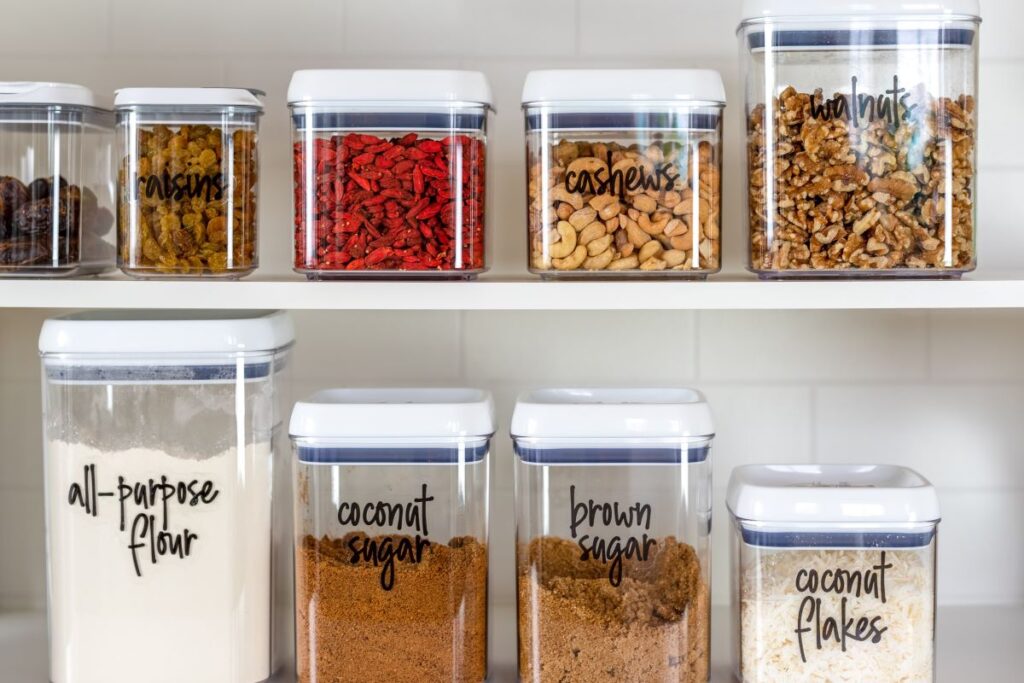
It’s also important to label containers when you decant things into them. I don’t for stuff like rice that we eat regularly, but for things we don’t use as much, like shredded coconut, I label with masking tape and Sharpie. Visibility makes it easier to keep track.
When decanting food into containers like flour, don’t mix the new flour on top of the old. Use up what you’ve got first, then refill and update with the new use-by date.
I think the biggest barrier is time. I open the pantry door, get overwhelmed, and think, “It’s just too big a job.” So, once a year is enough to balance clearing stuff out regularly with the reality of finding time to actually do it.
These little systems don’t have to be perfect — even doing them some of the time can make a difference.
Consider a dedicated ‘backup’ shelf for food items on standby for the old ones to be used up (or for stocking up for emergencies). If other family members help you unpack, explain your pantry system so they can help you keep on top of the rotation.
Clearing out the pantry is not my favourite chore, but if I’m going to spend hard-earned money on food, I don’t want to be wasting it!
Have you ever done a pantry clean-out challenge? What’s the oddest combo you’ve ended up cooking? I’d love to hear your stories or tips in the comments.