Here’s How I Create a Proactive Spending Plan that Helps Me Save
This website may earn commissions from purchases made through links in this post. As an Amazon Associate, I earn from qualifying purchases.
I’ve found budgets tend to fail more often than not. A simple yet effective alternative to the traditional budget is a proactive spending plan.

It’s no secret that I’m a fan of making a budget. I’ve been keeping a budget now since 2006.
Budgeting was my favourite subject when I studied accounting, and I loved developing them for business clients, for everything from clothing retail stores to cattle farms.
But here’s a hard truth that I found in both my personal life and for my clients.
Budgets rarely work.
The problem with budgets is that they are all about good intentions.
Good intentions give you nice warm and fluffy feelings, but they don’t give you actual results.
Not to mention that life is always ready to throw you a curveball when you’re least expecting it.
A budget (and tracking your expenses) can show you where you are overspending. But it won’t stop you from overspending in the first place.
And while I love nothing more than sitting down to a spreadsheet for fun, I acknowledge that is not what most people consider fun.
And no wonder when you read articles on how to create a budget, and they start like this:
“Budgets are a necessary evil” [source: money magazine CNN ] “Creating [a budget] can be extremely overwhelming” [source]
Today I’m going to share with you a budgeting technique that we’ve been using for a good many years now, which is much easier than the traditional budget but more precise than techniques like the 50/30/20 budget as described in Investopedia.
Disclaimer: This is general information only. In this blog, I share my savings and budget planning and what works for us, linking to authority websites where relevant. You should always consult a qualified financial expert when making money decisions to tailor plans to suit your circumstances.
Rather than creating a budget for the year and hoping that we’re going to stick to it – which is what we used to do, many years ago, when I learned to create traditional budgets- this simple budgeting method is a proactive and automated weekly or fortnightly plan for our money.
No tracking expenses, which is tedious, even for me (although often a necessary first step) and far fewer nasty surprises at the end of the month when you compare your actual spending to what you have budgeted.
TL:DR: We allocate our money for the upcoming week for savings and bills, automate most of it, and spend what’s left.
A Plan for Our Pay
Rather than budgeting for a month or – heaven forbid – a year, we budget for a pay period, which for us is fortnightly.
It’s much easier to control spending over the course of a week or fortnight than it is over the course of a month or year.
We automate most of our plan, so we can get on with everything else in life, while the budget mostly takes care of itself.
Here are the steps I use to organise my money each pay.
1. Pay Me First
Pay yourself first is the number one tip for better financial management. You’ve probably heard it a bazillion times. Experts like those at Investopedia recommend it as a foundational strategy to build savings.
But how many of us actually do it?
More often than not, we pay the expenses we have to and spend what’s left. We might put aside some money for long-term financial goals, like a holiday, but not regularly.
The first step of our Payday Plan is to pay ourselves first before spending on everyday expenses.
For me, as a self-employed person, my ‘pay myself first’ plan involves superannuation. It’s very tempting to skip a month when there are a lot of upcoming bills.
But I’ve found there’s some truth in the saying, ‘you don’t miss the money you don’t see.’
Ok, you do miss it, especially when money is tight, but I know my future self will thank my present self for putting long-term goals first.
2. Emergencies
Emergencies are costly and can throw the best-laid plans. Sometimes it feels like we’re just getting ahead, and the hot water heater blows up, or the car needs a new gearbox.
Which is where an emergency fund comes in – money socked away for such contingencies.
As part of our ‘pay ourselves first’ plan, we put aside money for emergencies. Even a little bit can make things easier and reduce the debt to cover emergencies. The government’s Money Smart website agrees, suggesting that even a little saved regularly is a good thing.
When I attended the Saver Plus program, designed to help low-income earners save, I heard people’s stories of how life-changing putting aside $2 in a jar can be. Every little bit counts.
It grows, very slowly, without us watching, and it helps keep the chaos at bay.
3. Bill Smoothing
Keeping on top of the bills is just one task in an avalanche of life-admin.
It can also be one of the most stressful parts of budgeting, especially in the rising cost of living, where income has to stretch further and further to cover rising bills.
Bill smoothing doesn’t stop rising expenses, but it does take the stress out of finding a big hunk of money to pay an upcoming bill.
It basically involves putting money aside every payday to cover upcoming bills. Similar to the 50/30/20 budget, where 50% of your pay is put aside for ‘needs’, although I like to calculate exactly how much I need to put aside each payday to cover each bill.
Then, when the bills arrive, I’ve already saved most or all of the total, taking some of the stress out of paying them.
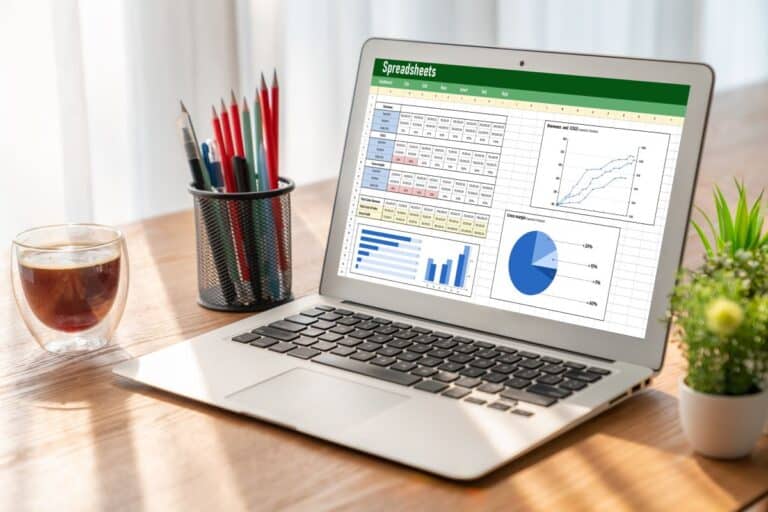
For further information on bill smoothing, see how I use the old envelope system, with a modern twist. Also, I share how I create a savings plan in Excel here.
From comments and emails people have sent me over the years, some people prefer to pay instalments directly to utility companies (like AGL’s program, for example), so when the bill comes, they only have to pay a small amount. They may even be in credit!
If you’re on Centrelink, you can use their free Centrepay service to make instalments from your Centrelink payment on your behalf (contact them for all the details).
4. Down With Debt
There’s a reason I’ve left debt until after savings.
While it can make sense to throw as much money as possible at reducing debt, I’ve found, in the long run, it’s a band-aid solution.
Because if I’m not putting money aside to pay the bills or for emergencies, how do I pay for them?
Yup, with more debt, creating a vicious cycle.
To break the cycle, I had to create a savings-first system so I wasn’t relying on debt. Then I used the tried-and-true snowball system to pay down debts. This method, popularised by Dave Ramsey, has been shown to be effective for many people by focusing on paying off the smallest balances first to gain momentum.
If I’m using savings to pay for the next bill, then paying off a credit card isn’t a one-step-forward, two-steps-back scenario.
5. Weekly Expenses
So far, I’ve paid myself first (in my case, super and emergency fund) and put money away to cover upcoming bills like electricity or car rego. What’s left covers weekly expenses like groceries and petrol.
For these expenses, I use a loose envelope system – not cash anymore, but similar.
For public transport, I can transfer a fixed amount to a transport card (in my case, the Go Card – lovin’ the QLD 50c fares at the moment!).
I also use a pre-paid card for my personal spending (which is a couple of coffees a week at the moment).
Then, what’s left in the bank after everything else is taken care of is for weekly expenses like groceries.
For a while, I used a budgeting app (specifically Goodbudget – it’s free and doesn’t link to bank accounts) to track irregular expenses so I knew a ballpark figure, but after a while, you know what your set amount is. It’s why I like grocery shopping online – much easier to take something out of the cart if you go over budget!
6. Fun Fund
For me, at least, budgeting is similar to dieting – if I’m too strict, I’m going to fall off the bandwagon and go on a spree.
So we allocate an ‘allowance’ for fun money. As mentioned above, mine involves coffee, and I use a prepaid card to keep spending within my set limit.
There have been times when it’s only been enough for one coffee a week, back when coffee was still $3. But even just a tiny amount for ‘fun’ can help keep me on track over the long run.
Summarising My Spending Plan
In summary, each payday I put aside:
- savings for long-term goals (pay myself first)
- emergency fund savings
- money to pay upcoming bills
- debt repayments
- weekly expenses
- fun money
I find it easier to budget $20 for a bill each week (or whatever the amount is) than to try to find $500 when the bill arrives in my inbox.
It’s more specific than the percentage budgets, whether it’s a 50/30/20 split, 40/30/20/10 split, 60/30/10…you get the idea, but still easier to follow than a traditional spend-and-hope budget.
How do you budget to stay on top of the bills? Feel free to share your tips in the comments below.




As far as budgeting goes we generally avoid credit or debit cards for personal expenses. Every week we get my ‘Spending Money’, in cash, for day to day expenses. Any left over goes into our ‘Stash’ for unexpected things or a fun meal out.
When we lived in the UK, where monthly pay is more common, we used to divide the monthly money up into 4.5 weeks. This meant twice a year we had gained a spare weeks money!
What a great idea for dealing with monthly pay! Thanks for sharing your tips. A ‘stash’ is a great way to pay for unexpected expenses!
This is how I have always ‘budgeted’ ever since I left home, and I love it! It just seems to make sense for me and my needs. I don’t think there has ever been a time when I have not had money set aside to pay my bills on time. Brian’s idea of the ‘stash’ fund is a great idea.
Hi Natalie, thanks for leaving a comment.
It’s great to hear this way of budgeting is working for you.